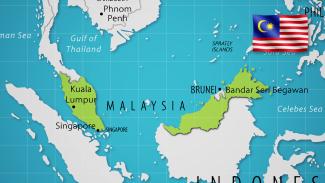
Our Going Global series has been taking ‘shallow dives’ into some of the countries and cities where Orchid’s Sage Add-ons have taken root. Previous episodes have included such places as Eswatini, Aruba, Saint Lucia, American Samoa, Papua New Guinea, Mauritius, Atlanta, and Saigon.
This time we look at Kuala Lumpur, venue for the Sage Partner Executive Forum (APAC 2026)
Ten (or so) things you may not know about…Kuala Lumpur
- What’s in a name? Kuala Lumpur is Malay for “muddy confluence.” The city began where the Klang and Gombak rivers meet, site for an unglamorous, muddy trading post for tin miners in the 1850s.
- Forest in a City: The Bukit Nanas Forest Reserve (now known as KL Forest Eco Park), is right near the city centre. It is one of the oldest protected forests in Malaysia and predates the city itself.
- That Sinking Feeling: The city is built on soluble limestone karst, resulting in caves and sinkholes. This has caused occasional building subsidence, as well as the famous Batu Caves just north of the city.
- Tall Twins: The Petronas Twin Towers held the title of world’s tallest building from 1998 to 2004, and still remain the tallest twin towers in the world.
- Colonial Quirks: After Malaysia achieved independence from the British in 1957, many roads were then renamed. Locals still commonly use the old British-era names, which can be confusing for visitors, and sometimes also for GPS navigation systems.
- Melting Pot: KL is one of the most linguistically diverse cities in Asia. In a single day, you might hear Malay, English, Cantonese, Mandarin, Hokkien, Tamil, Hindi, Arabic, and more. These are often mixed mid-sentence, a phenomenon called Manglish.
- Monkey Business: In certain neighborhoods (especially near green areas), monkeys regularly steal food, sunglasses, and even phones from unsuspecting pedestrians.
- When it Rains, it Pours: It rains so often that buildings are designed around it. Covered walkways, deep overhangs, and elevated malls are common. KL architecture quietly assumes you’ll get caught in a tropical downpour at least once a day.
Orchid EFT's Global Footprint
Today, Orchid’s EFT Processing supports 800+ bank formats in 80+ countries.
From Alberta to Aruba, New Zealand to Zambia, we may already have the format you need. If not, just let us know and we can set it up!